Helping children connect with grandparents through a shared heritage language is one of the most rewarding gifts a family can provide. In our fast-paced, screen-driven world, diaspora families in Australia and across the globe often watch their children become monolingual English speakers within a single generation. When children cannot speak the mother tongue of their elders, Sunday phone calls turn into awkward silences, and cherished family traditions begin to fade. Structured language education bridges this painful divide.
At Lingua Learn Australia, we believe that cultural heritage is a lifelong asset. Through our specialized kids & teens language programs, delivered by compassionate native-speaking teachers, we help young learners build active conversational confidence. Supported by structured curriculums, comprehensive language assessments, and a fast 24-48 hour certificate turnaround, we empower children to speak their heritage language with joy and authenticity.
Here are 5 meaningful ways that targeted 1-on-1 language lessons help children connect with grandparents and preserve cultural roots in a digital age.
1. Moving Beyond “Passive Bilingualism” to Connect with Grandparents
In many immigrant households, children develop what linguists call “passive bilingualism.” They understand commands or kitchen phrases spoken by parents, but they respond entirely in English. When children try to connect with grandparents who may not speak fluent English, communication breaks down almost instantly.
1-on-1 tutoring transforms passive comprehension into active production. In a private, low-pressure lesson, a child is gently prompted to articulate complete thoughts, formulate questions, and express opinions in the target language. By practicing with a dedicated instructor, children overcome the shyness and fear of making mistakes that often keep them quiet during family gatherings.
2. Safeguarding Family Oral History and Cultural Wisdom
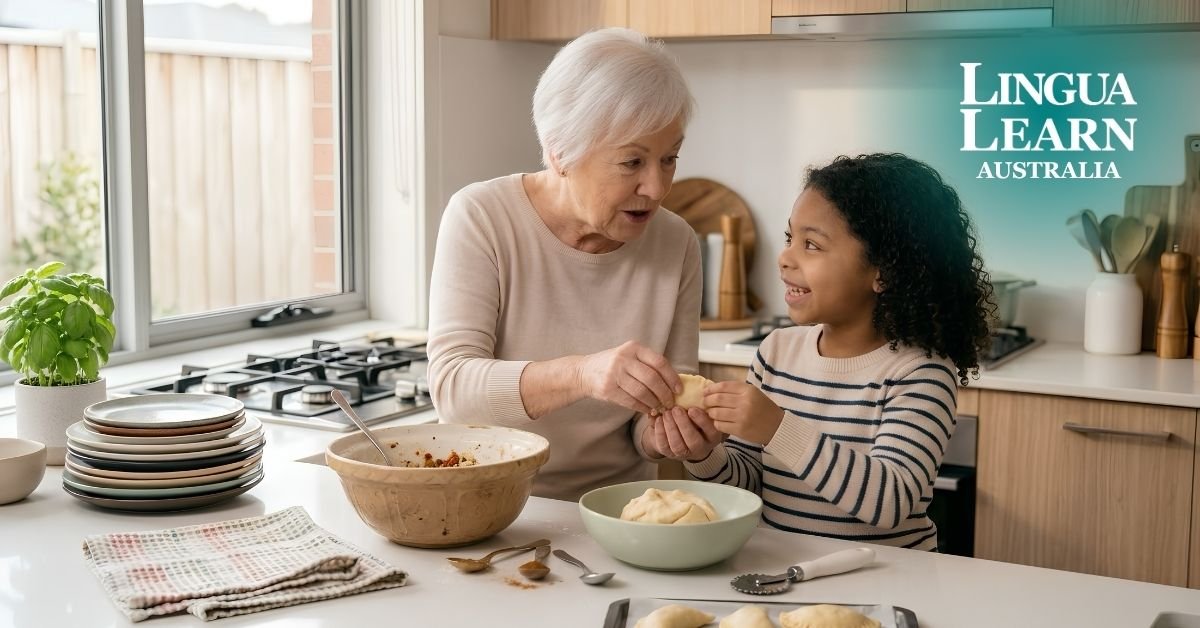
Grandparents are the living archives of a family’s history, folklore, and cultural identity. To truly connect with grandparents, children need the vocabulary to understand complex storytelling so that valuable narratives about ancestral journeys, traditional customs, and life lessons are not lost forever.
Structured language lessons provide the conceptual and emotional vocabulary children need to engage in deeper dialogues. According to research recognized by the Council of Europe on intercultural language learning, language learning is fundamentally tied to social cohesion, empathy, and cultural identity. When children gain intermediate language tools, they can ask grandparents about their childhoods, listen to traditional tales, and understand familial history firsthand.
3. Building Tailored Lessons Around Family Realities
Group classes often follow rigid academic textbooks that focus on classroom terminology, such as school supplies or grammar drills, rather than domestic warmth. These sterile topics do little to help an eight-year-old talk to their grandmother about what they cooked or how their week went.
Personalized 1-on-1 lessons allow tutors to adapt learning materials directly to the family’s regional dialect and real-world interests. Whether learning Lebanese Arabic, northern Vietnamese, southern Italian, or conversational Tagalog, lessons can incorporate specific family customs, traditional holidays, and daily routines. This personalization makes practice immediately applicable for the next video call with overseas relatives.
4. Ensuring Secure, Child-Friendly Digital Learning Spaces
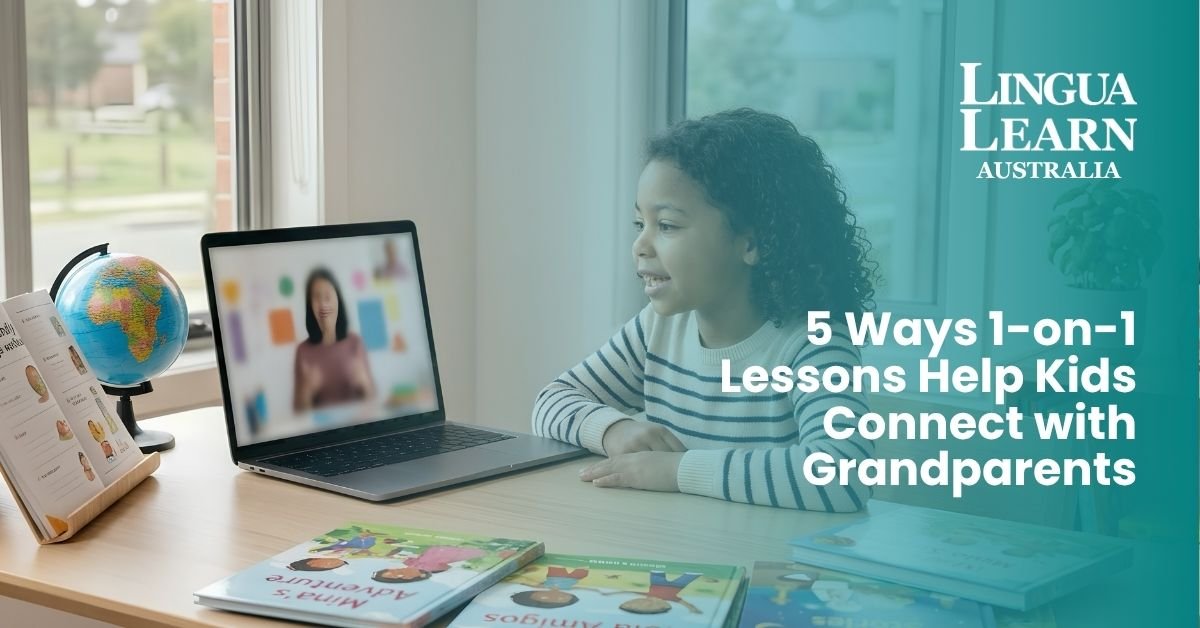
Modern parents are understandably vigilant about their children’s digital footprint and screen-time safety. Group video platforms, open chat applications, and unmoderated online tutors introduce unnecessary digital exposure for younger learners.
Safe language learning requires a secure, gated digital environment. The eSafety Commissioner’s parent guidelines highlight the necessity of choosing verified educational platforms with clear safety protocols. Working with vetted, professional language schools ensures lessons are conducted in private, encrypted virtual classrooms where child safety and educational privacy are guaranteed.
5. Reinforcing Emotional Resilience and Cross-Generational Empathy
Children who maintain a strong link to their heritage culture demonstrate greater emotional resilience and a healthier self-concept. Knowing where they come from anchors young learners in multicultural societies, turning differences into sources of strength.
When a child takes the time to speak an elder’s native tongue, it creates a meaningful opportunity to connect with grandparents who feel deeply respected and valued. This mutual effort strengthens the intergenerational bond, replacing superficial greetings with genuine affection and understanding. A child who learns to navigate two linguistic worlds grows into an adult with higher emotional intelligence, natural empathy, and global adaptability.
Reconnect Your Family with Lingua Learn Australia
Preserving your family’s heritage language requires an intentional, supportive educational partner. At Lingua Learn Australia, we provide personalized online learning designed to turn ancestral roots into lifelong fluency.
- Caring Native-Speaking Teachers: Expert instructors skilled in motivating young learners through patient, engaging dialogue.
- 1-on-1 Child-Centered Curriculum: Custom lesson plans adapted to your family’s preferred dialect and cultural background.
- Objective Milestone Tracking: Progress assessments and transparent reporting within 24 to 48 hours to celebrate your child’s achievements.




Leave a Reply
Want to join the discussion?Feel free to contribute!